


Last time I walked into that office, I was convinced I still had the job.
I even had a plan.
I’d been building it in my head during night breastfeeds: how we could charge for the services we were giving away for free, how we’d grow the team, what I’d fix in sales and marketing the moment I came back…
In my head it was already working.
Then they told me I was being replaced.
The reason?
Being a mother is demanding. Especially when you have to travel to another city every day for work.
They said it kindly. Like they were doing me a favour.
Well, they actually did, but I didn’t know it back then.
I cried my eyes out that night. I wanted to work in recruitment that badly. I was mourning not a job, but a version of myself.
And in the morning there was still no job, a baby who needed feeding, and a husband who was also out of work.
In Montenegro, when a baby is born, people bring money. We lived on that for months.
It helped that we had our own house and grew our own food. But bills don’t care where your tomatoes come from, and neither does the gas station. There was no state child allowance back then.
So we ran on my husband’s small carpet washing service while we figured something out.
(That little business is still bringing in nice money, by the way).
It took me years to understand they didn’t decide I’d become bad at my job. They decided I’d become expensive to someone else’s calendar.
Being a mother is demanding.
Fine.
If being a mother is demanding, let me build my work around that!
Here’s how I flipped the script
With a baby on my hip, no backup plan, unemployed husband, I played with my career like I had nothing to lose.
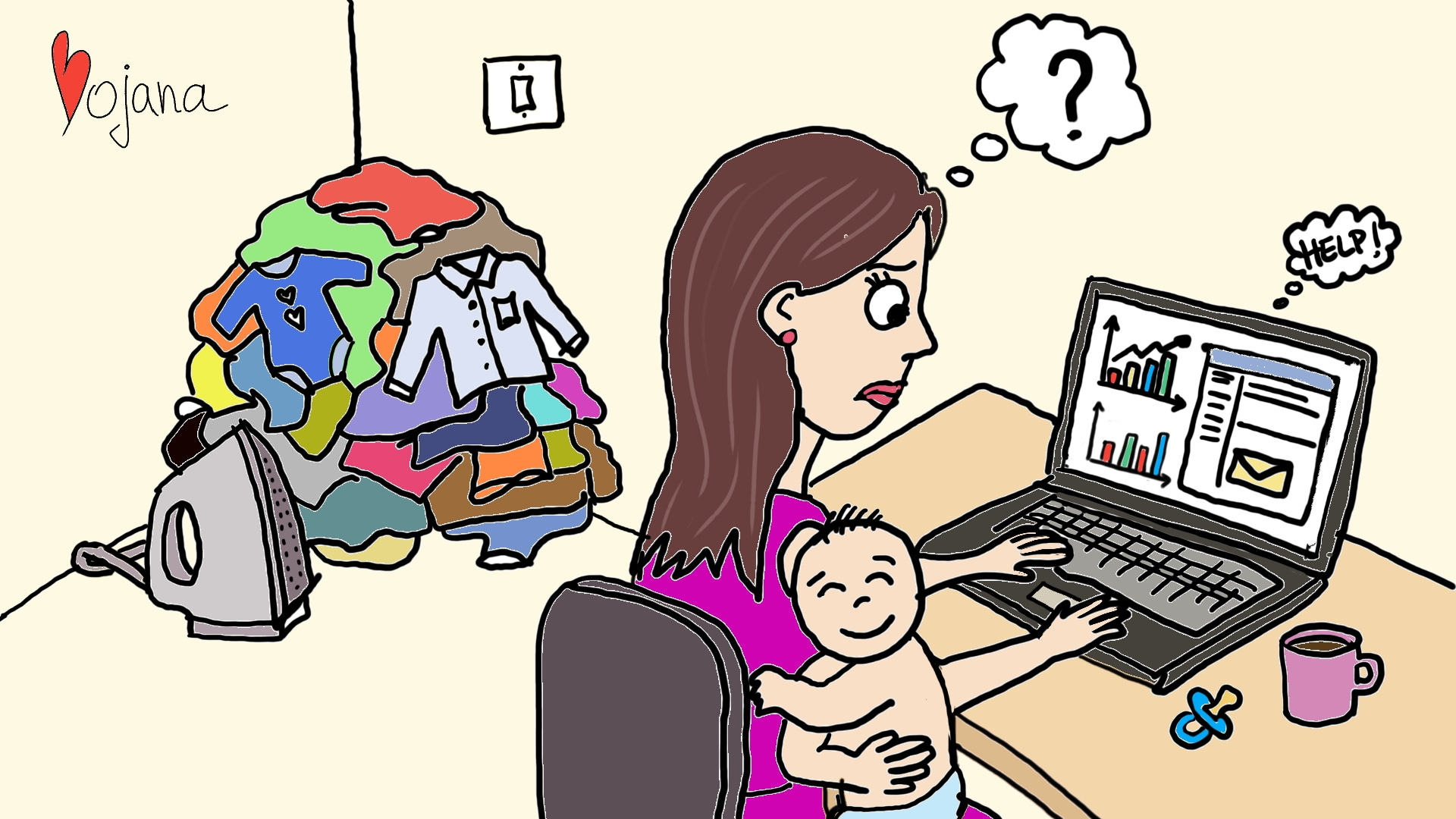
After that initial denial, and a sleepless night, I woke up remembering my plan.
So I took these 12 steps.
2 of them made me no money at all, but I’m leaving those in because the versions of this story that delete the dead ends are exactly why you think you’re behind.
I put my baby down for his mid-day sleep and opened my laptop.
Step 1: I searched for “How to become a recruiter” on Google
Back in 2016 there was no AI, so you had to do your search. Good old times.
Google suggested “freelance recruiter”, and that was the moment I understood that freelancing isn’t only for designers or developers.
Cool.
I found articles, online courses and a whole market I’d been standing next to for 2+ years without noticing.
One platform kept showing up.
Step 2: I opened a profile on Upwork.
The platform seemed to be the best one for freelancers, so I opened a profile.
I realized 2+ years in recruitment didn’t teach me how to sell recruitment! Which was humbling, because I’d spent years reading other people’s applications and judging them. Turns out reading them and writing one are not the same skill at all.
I finally bought a course on Udemy.
That’s when I understood that, even if I had the profile, I didn’t have the market.
Step 3: I built an audience before I had anything to sell them
I made a Facebook page called “Jobs abroad” and just posted every job I found online.
No strategy. I wanted people to find them in one place.
Back in 2016 the algorithm was a nice guy, so collecting around 2,000 followers wasn’t that hard.
Then I put in 100€ to sponsor the page. Another 5,000+ people followed.
That was the first time I thought: there might be a business in here.
Step 4: I decided I needed a website to look more professional.
I didn’t have money to invest in web development agency (I was unemployed now, remember?), so I bought a course on how to create a Wordpress website.
It took days before I understood what I had to do — from buying domain and hosting, to learning Elementor and design basics.
A couple of months later, with help from a friend, I had a very basic site listing the jobs I was getting through Upwork.
And then Upwork went quiet.
That’s dead end number one. Months of work pointed at a channel that wasn’t paying me.
Step 5: Website was up, but nobody came.
I had the thing. I had no idea how to get anyone to it.
So I spent the little money I had on sales and marketing courses and coaching, and I started writing blog posts.
Back then blogging worked. (If it’s still working for you — tell me, I really want to know.)
I asked questions on my Facebook page, people responded and gave me ideas for the topics. So I shared those blog posts on my page and candidates started sending their resumes before I’d asked for any.
I had candidates. I still had no clients :)
Step 6: 160 cold offers to get one “let’s talk”
I made a list of around 100 agencies and 60 hotels.
In the meantime, I created a new gmail address that seemed professional (it wasn’t, cringe!) and developed my first intro document in PowerPoint.
I named my “online business” (Minuta do posla, which means “a minute away from work”) without registering anything.
I started sending my offer to those agencies and hotels.
Many rejections later, I got my first “Let’s talk”.
Around the same time Upwork woke up and I landed my first real recruitment project there.
Within months I had more clients than candidates.
The agency paid me 350€.
That first Upwork project paid 1,600€.
It turned into a long-term collaboration paying between 1,300€ and 3,000€ for every candidate I placed.
And because I finally had reviews and something that looked like a track record, other Upwork clients started saying yes too.
Step 7: The year it stopped being a hustle.
In October of 2017, I finally registered my business.
Collaborating with agencies from the Middle East brought some big names to my client list, like “Ritz Carlton”, “Sheraton”, “Hilton” and others.
I was placing people in jobs abroad, mostly Malta, Germany and Middle East. I started putting chunks of my blog posts on Linkedin to pull more eyes to what I was building.
The workload got too big, so I hired my first employee!
Soon we both noticed that we had so many good candidates who were failing interviews, or never getting invited to one.
They didn’t know how to position themselves. They couldn’t name what they were good at. They had no idea how to negotiate.
Mostly 19 to 27 years old, and nobody had ever taught them.
Step 8: My gut saved my butt.
Late in 2019 I had a strong gut feeling that we should not focus on recruitment only, and put all eggs into the same basket.
We added career coaching to our services.
I’m a Psychologist by vocation, so career coaching came naturally.
I am happy that I listened to my intuition, because… we all know what happened in 2020.
Then hotels stopped hiring altogether.
My gut saved my butt LOOOL.
Through lockdown, people wanted to learn and to be coached. Coaching carried the business through the year recruitment couldn’t.
I also knew that wouldn’t last forever.
Step 9: I went looking for remote companies.
It seemed that remote was the future of work.
Four new clients — gaming, IT, marketing, finance. I dropped hospitality for good and grew the team.
And the game changed on me again. I wasn’t placing 22-year-olds anymore.
I was placing seniors.
Completely different people, with different fears, different money, different everything.
They weren’t on Facebook or Instagram. They were on LinkedIn.
So that’s where I went :)
Twice a week, every week. Some of those posts hit 150k views.
Step 10: I (unintentionally) added another layer to my business
While running my business on 2 fronts, companies and institutions started noticing me on LinkedIn.
Soon I received my first invites to deliver a workshop on LinkedIn presence. I accepted them of course, although I had never hosted a workshop in my life before.
If you haven’t noticed already, through all those years I learned an important lesson:
Say YES, then go and learn how to do it.
Later that portfolio expanded to workshops on Resume writing, Job interviews, Career change, Soft skills, etc.
I am still doing that, by the way. Some of them are online, some require live presence.
They’re also how I get inspired and stay current. I mean, you can’t write honestly about a market you stopped standing in, right?
Until…
Step 11: A pilot workshop turned into a second company
Standing in front of other people’s audiences taught me I could hold a room.
So I built one of my own. A pilot workshop called “Go Remote” — an experiment to help me find out whether anyone would actually be interested in working remotely and pay for it.
10 people bought a spot.
Then 30 more bought the recording afterwards.
That’s when I realized that it wasn’t the workshop they loved. It was the remote part.
So I did the thing I’ve done at every other step in this story :) I said yes before I’d thought it through, and registered a second business — this time in the US.
Minuta do posla stayed with the companies doing the hiring.
Exit The Office is for the people doing the applying.
Two businesses, opposite sides of the same table. I didn’t plan that either.
Oh, by the way, on September 11th at 5pm CET I’ll be hosting an upgrade of that: workshop named How to turn your skills into a remote job. Live only this time, and everyone who comes gets a 1-1 call with me afterwards to work out their own order. Pre-orders are open, start from here.
Step 12: I’m doing it again, in public, right now :)
I strated writing on Substack in 2026. This one is ongoing.
On paper it’s just my marketing. But in practice it’s a true career transition, because it’s asking me to build skills I don’t have yet.
Including my drawings like this one:

I never once thought that would become useful.
Dead end number two, honestly: I don’t know yet whether this works. Ask me in a year. Or subscribe to follow my journey.
But what worked for me might not work for you…
There’s a pattern in those 12 steps I couldn’t see while I was living them:
Every single one starts the same way. I say yes to something I don’t know how to do, then figure it out mid-air.
That isn’t courage, my friends. It’s a thinking preference.
My brain is comfortable jumping before it can see the ground, and genuinely uncomfortable sitting still to research first. From the outside that looks brave, but from the inside it’s just the path of least resistance for the way I’m wired.
Which matters for you.
If your brain doesn’t work like mine, copying my order will hurt.
Some of you are reading this and already itching to plan Step 4 before finishing Step 1 — and you should. That’s your actual advantage, and I’d be taking it from you if I told you to jump like I did.
The part I almost left out
Back in 2018, I’d been writing blog posts every Monday at 5pm for 6 months.
I felt like no one was reading, so one Monday I decided to stop.
But at 5:30pm that same day, I received a LinkedIn DM from a person who was asking me where to find this week’s post.
Since then, I wrote every single blog post having that one person in mind.
That’s when I started taking my first busines seriously.
I nearly cut this bit, because nothing happens in it. Nobody gets hired. No money changes hands.
I left this in, so you know that sometimes when you feel nothing is working, everything is working just fine :)
This is where the story ends…
Since the morning I was told I was being replaced, I’ve coached 2,200 professionals, interviewed over 3,000 candidates for remote roles, and delivered more than 180 workshops to 6,000+ students.
Not once did I think it was impossible.
Maybe I was too delulu, and that’s exactly what made it work!?
Before you go…
You’ve got the whole story now. Here’s what to do with it.
Before you move: figure out what’s actually wrong
🧠You have two brains in your head — where the thinking-preference part of this story comes from, and why copying my order would hurt some of you. If you read one more thing, read this.
No one cares about your passion. You need a profit model instead.
Get found, get hired: the recruiter’s side
Going remote, without the fantasy
P.S. Don’t forget: September 11th, 5pm CET — How to turn your skills into a remote job. Pre-orders available when you click here.